
Apostille, Authentication and Legalisation in South Africa
Understanding the processes for authenticating South African documents for use abroad, including the role of notaries and government departments.
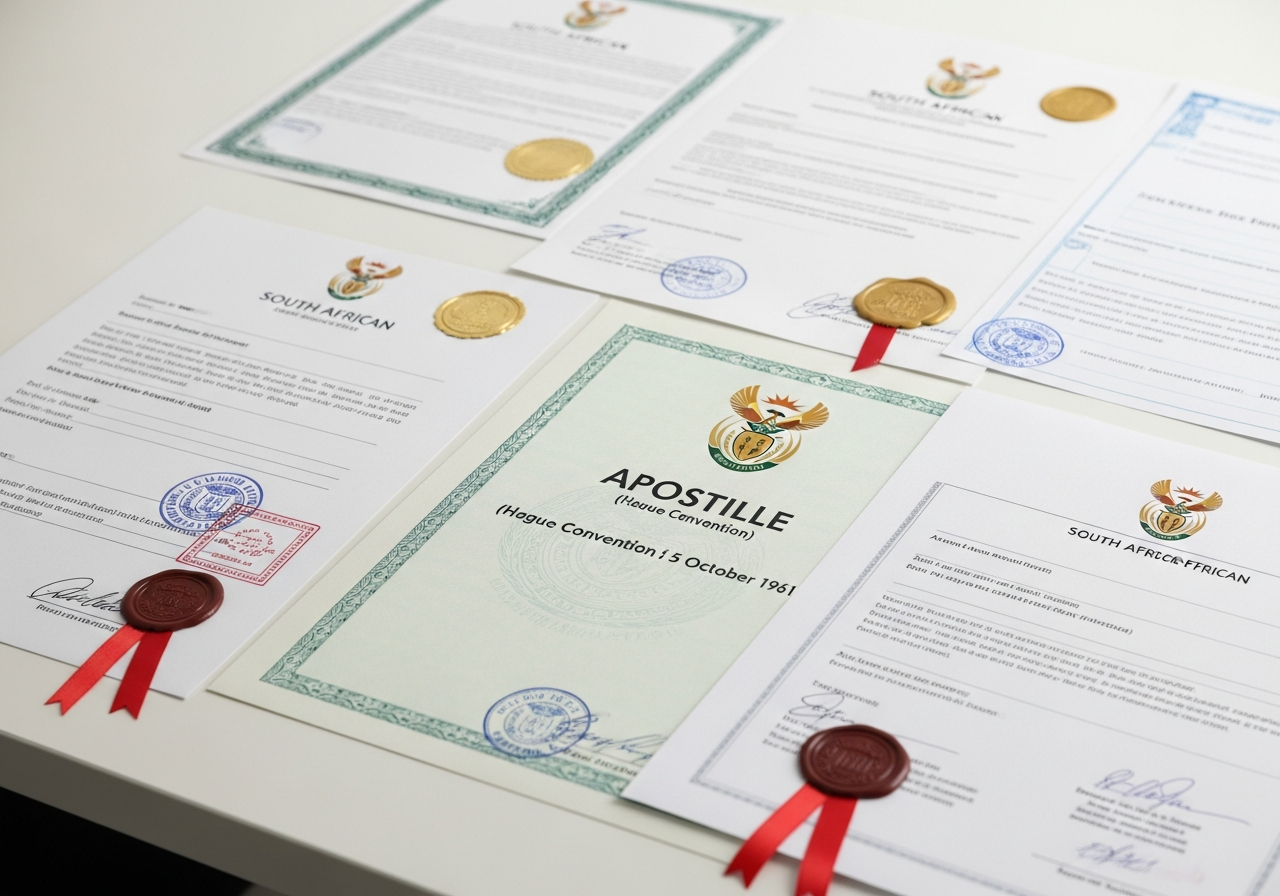
Apostille vs Authentication: What's the Difference?
When a South African document needs to be used in another country, foreign authorities often require proof that the document is genuine. This is where apostilles and authentication come in.
Apostille: An apostille is a standardised certificate issued under the Hague Apostille Convention (1961). It confirms that a document is genuine and has been properly signed and sealed. South Africa is a member of the Hague Convention, which means apostilled documents are accepted in over 120 member countries without further legalisation.
Authentication (Legalisation): For countries that are not members of the Hague Convention, a more complex process called authentication or legalisation is required. This typically involves verification by DIRCO followed by legalisation at the embassy or consulate of the destination country.
The Role of a Notary Public
A Notary Public plays an important role in the document authentication process:
- Certifying copies: A notary can certify that a copy of a document is a true copy of the original. This certified copy can then be submitted for apostille.
- Attesting signatures: If a document needs to be signed in the presence of a notary, the notary attests to the authenticity of the signature.
- Preparing notarial certificates: For certain documents, a notary prepares a notarial certificate that accompanies the document through the authentication process.
- Administering oaths: Some documents require the deponent to swear an oath before a notary.
It is important to understand that the notary's role is separate from the apostille itself. The notary certifies the document; DIRCO issues the apostille.
The Hague Apostille Convention
The Hague Convention of 5 October 1961 Abolishing the Requirement of Legalisation for Foreign Public Documents (commonly known as the Apostille Convention) simplifies the process of authenticating documents for use in member countries.
As of the date of this writing, over 120 countries are members of the Convention. These include most European countries, the United States, Australia, the United Kingdom, and many others. A current list of member countries can be found on the Hague Conference on Private International Law website.
When a document has an apostille attached, it should be accepted by authorities in any Hague Convention member country without further authentication or legalisation.
The DIRCO Authentication Process
The Department of International Relations and Cooperation (DIRCO) is responsible for issuing apostilles and authenticating documents in South Africa.
General process for apostilles:
- Obtain the document you need authenticated
- If required, have the document notarised by a Notary Public
- Submit the document to DIRCO for apostille
- DIRCO verifies the document and issues an apostille certificate
- The apostilled document is returned to you
General process for non-Hague countries:
- Obtain the document you need authenticated
- If required, have the document notarised by a Notary Public
- Submit the document to DIRCO for authentication
- After DIRCO authentication, submit to the relevant embassy for legalisation
- The embassy verifies and stamps the document
Note: The exact requirements may vary depending on the type of document and the requirements of the receiving country. It is advisable to confirm the specific requirements with DIRCO or the relevant embassy before beginning the process.
Typical Timelines
Processing times for apostilles and authentication can vary significantly depending on several factors:
- The type of document being processed
- Current workload at DIRCO
- Whether the document requires additional verification
- For non-Hague countries, processing times at the relevant embassy
As a general guide, apostille processing through DIRCO can take anywhere from a few days to several weeks. However, these timelines are indicative only and can change based on circumstances at the department.
For time-sensitive matters, it is strongly recommended to begin the authentication process well in advance of when you need the documents.
Common Documents Requiring Apostille
The following types of documents commonly require apostille or authentication for international use:
- Personal documents: Birth certificates, marriage certificates, death certificates, divorce decrees
- Educational documents: Degrees, diplomas, academic transcripts, professional certifications
- Legal documents: Powers of attorney, affidavits, court orders, notarial deeds
- Commercial documents: Company registration documents, board resolutions, contracts (in some cases)
- Police clearance certificates: Often required for immigration or employment abroad
What to Bring to Your Notary Appointment
When visiting a Notary Public for document certification or preparation, you should bring:
- The original document(s) to be certified
- Your valid identity document (ID or passport)
- Information about the destination country and purpose
- Any specific requirements from the receiving institution or country
- If signing documents: information about the transaction or matter
When to Seek Legal Advice
While many apostille and authentication matters are straightforward, you should seek legal advice in the following situations:
- You are unsure what type of authentication is required
- The receiving country has specific or unusual requirements
- The document involves complex legal matters
- You need a power of attorney to be executed for use abroad
- There are discrepancies in your documents that need to be addressed
- The matter involves significant financial or legal consequences
Important Disclaimer
This information is provided for general educational purposes only and does not constitute legal advice. Requirements for apostille and authentication can change, and specific requirements may vary by document type and destination country. Always verify current requirements with DIRCO and the relevant embassy or receiving institution. Processing times mentioned are indicative only and may vary based on current conditions.
Practical Next Steps
What to Prepare
- -Original documents to be certified
- -Valid ID (SA ID or passport)
- -Info about destination country
- -Requirements from receiving institution
Key Timing
- -Start 4-6 weeks before deadline
- -Allow for DIRCO processing time
- -Factor in embassy turnaround if needed
- -Build in buffer for unexpected delays
Common Mistakes
- -Assuming all countries accept apostilles
- -Not checking specific country requirements
- -Starting the process too late
- -Submitting uncertified copies